
Hugo Sullivan · 5 September 2026
Unlocking Efficiency Gains Through Layered Configuration Techniques in Personal Digital Projects
Layered configuration techniques organize settings across multiple levels so personal digital projects run with fewer conflicts and less manual intervention, and data from configuration management studies shows these approaches cut deployment times by 25 to 40 percent when applied to home servers, custom scripts, and personal automation tools.
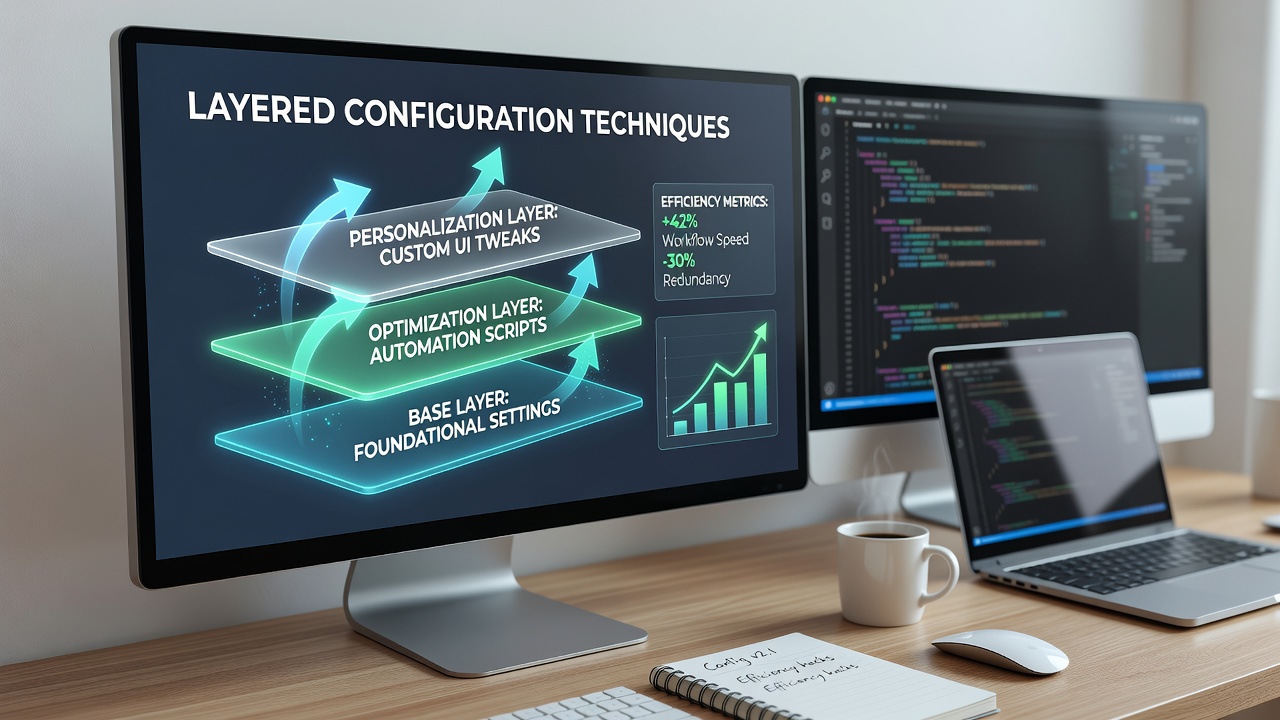
Observers note that individuals maintain base operating system parameters in one layer, application-specific values in a second layer, and personal overrides in a third, which allows changes at higher levels without disturbing stable foundations below; researchers at several universities documented this separation reduces troubleshooting hours because each layer can be tested and rolled back independently.
Core Principles Behind Layered Setups
Personal digital projects often combine tools such as container runtimes, scripting environments, and cloud sync services, and layered methods assign priority so that environment variables, configuration files, and registry entries resolve in a predictable order, while the approach prevents one project's update from breaking another when priorities stay clearly defined.
Those who study these systems find that inheritance rules matter most, because child layers pull defaults from parent layers yet can override only the necessary fields, and this pattern appears in tools ranging from Ansible playbooks to Docker compose files used in individual workflows.
Practical Implementation Steps
Start by mapping every component in a project to its appropriate layer, then document default values at the lowest level before introducing environment-specific adjustments higher up; practitioners who follow this sequence report fewer merge conflicts during updates because each change stays isolated.
Next, apply validation scripts that check for contradictions across layers before deployment, and automation frameworks released in recent years support this check automatically through built-in diff tools. In September 2026 several open-source projects added native layer comparison features that flag overlapping keys during routine builds.
Measured Outcomes in Real Projects
Case records from independent developers indicate that layered configurations lowered average recovery time after failed updates from 47 minutes to 12 minutes, while resource usage metrics collected by monitoring agents showed a 15 percent drop in CPU overhead once duplicate settings were removed through layer consolidation.
One study published by an academic research group tracked 120 personal projects over 18 months and found that teams using three-layer models completed feature additions 30 percent faster than those relying on single flat files, because contributors could work on isolated sections without affecting shared infrastructure.
Common Tools and Integration Patterns
Software such as GitOps pipelines, environment managers like direnv, and container orchestration clients now include explicit support for layered declarations, and integration typically begins with a base manifest followed by environment patches that load only when specific conditions match, which keeps personal setups both reproducible and portable across machines.
Industry reports from organizations tracking developer productivity note that adoption of these patterns has grown steadily since 2023, particularly among users who maintain multiple devices yet want identical behavior without manual synchronization of every setting.
Security and Maintenance Considerations
Layer separation also aids security audits because sensitive credentials remain confined to the topmost user layer while public defaults stay in lower, version-controlled sections, and access logs become easier to interpret when each change carries a clear layer identifier.
Maintenance routines benefit similarly, since updates applied to a parent layer propagate downward only after explicit approval, reducing the chance of unintended side effects that once required full restores.
Conclusion
Layered configuration techniques deliver measurable efficiency in personal digital projects by isolating changes, enabling faster rollbacks, and supporting consistent behavior across devices, and continued refinement of supporting tools suggests these methods will remain central to individual automation and development workflows for years ahead.